Human-centered Smart Buildings
A series of studies with smart building occupants
2019-2021
Duration: 5 studies spanning accross 2 years
Role: Human-Computer-Interaction Researcher (PhD)
Team: Independent Research with 45 Building Occupants
Methods: Human-Centered Design, Qualitative & Mixed Methods, Co-Design
Impact: Generated design principles for human-centred intelligent environments and responsible use of AI in the built environment.
Overview My PhD focused on understanding how people experience data-driven environments and translating those insights into opportunities for more transparent, user-centred products and services in smart buildings.
Using a human-centred design approach, I led end-to-end research within a large smart office building, working closely with occupants and technical stakeholders. Through qualitative and participatory research methods—including interviews, focus groups, co-design workshops, diary studies, surveys, and prototype evaluations—I identified key user needs, pain points, and trust concerns related to data collection, AI-driven systems, and workplace wellbeing.
Design Research Approach
I designed and facilitated research activities to uncover how building users perceived data collection, privacy, environmental conditions, and wellbeing interventions, transforming findings into actionable design requirements, service concepts, and product opportunities. This work informed the design of solutions that increased transparency, user agency, and trust in smart building technologies.
Alongside qualitative research, I led mixed-methods studies combining self-reported user feedback, wearable sensor data, and environmental data to investigate relationships between workplace conditions, user experience, and wellbeing outcomes over time. This involved designing data collection frameworks, analysing quantitative and qualitative datasets, and synthesising insights into recommendations for product and service development.
Outcomes
Key outcomes included:
- Identifying opportunities to improve transparency, consent, and user control within data-driven environments through privacy-by-design principles.
- Defining product and service concepts that leveraged building and environmental data to support user wellbeing and workplace decision-making.
- Designing and prototyping novel human-AI and physical computing solutions, including an interactive workplace divider that surfaced real-time environmental data to help occupants make informed decisions about where and how to work.
- Translating complex research findings into strategic recommendations, design frameworks, and product concepts for industry and academic stakeholders.
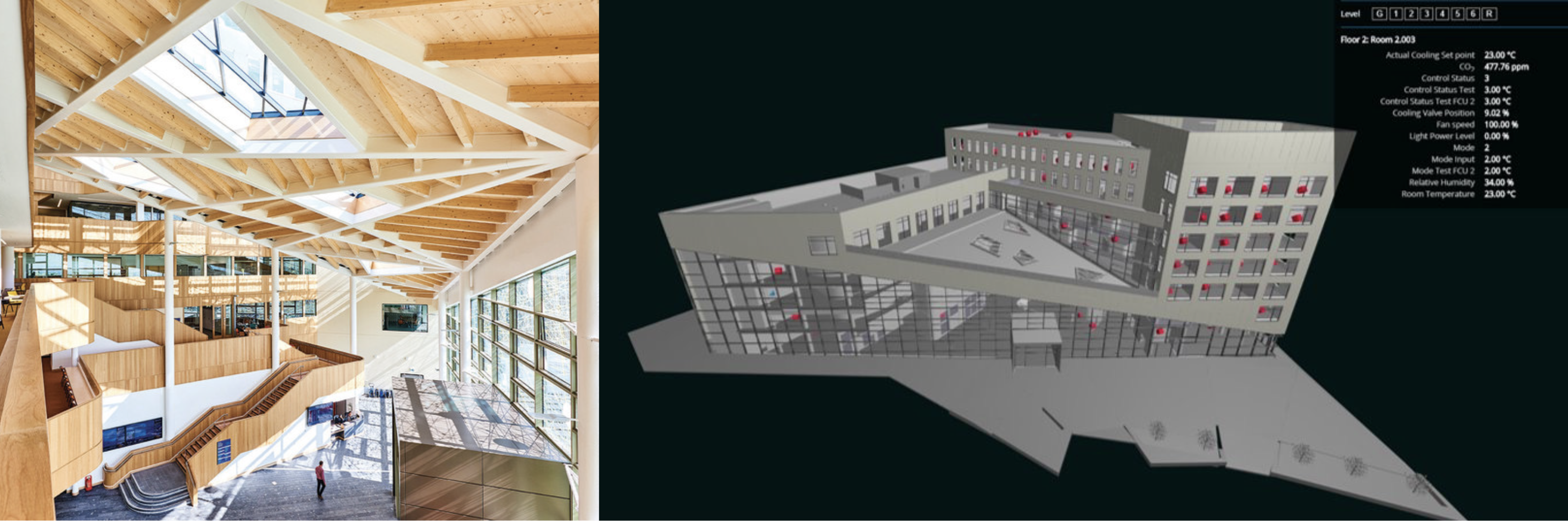 Above: Image of the building’s autrium and the building’s open data stream (API).
Impact
The research resulted in three peer-reviewed publications and contributed new approaches for designing ethical, transparent, and user-centred smart environments.
The first focuses on unpacking how the building occupants perceive data collection and use within the smart building - particularly how data is used to improve wellbeing - and speculating on design solutions in that utilize data differently. The paper frames a design agenda for improving smart building’s occupant experiences and increasing the perceivability, accessibility, usability and ethical use of data and AI in such buildings - published in the ACM CHI 2023 conference proceedings, see publication.
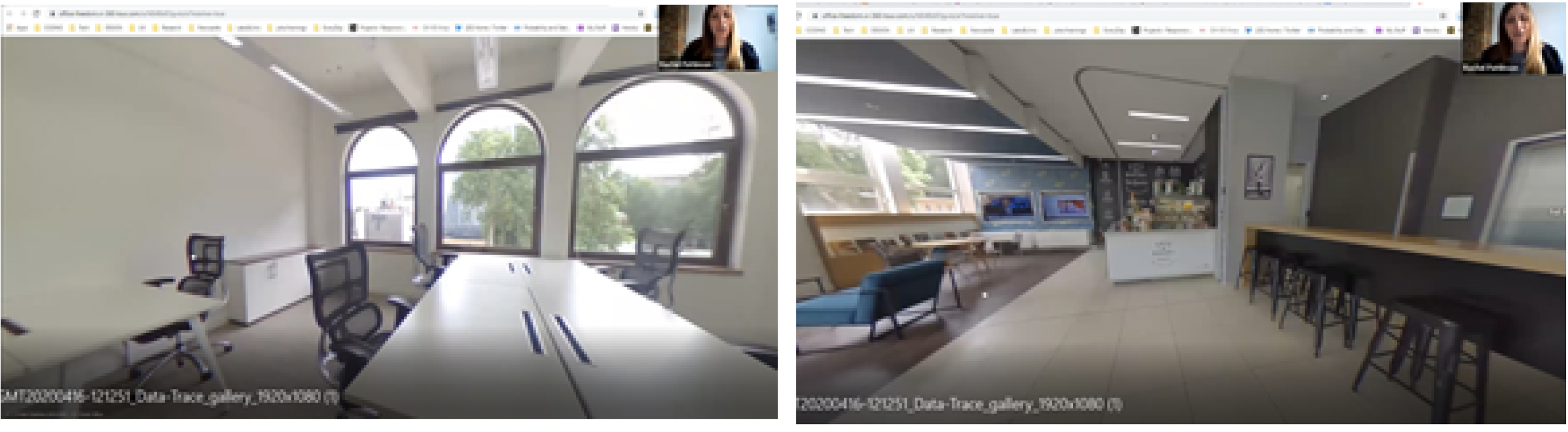 Above: Co-Design Workshop (online) - Participant speculating about alternative uses of data in smart buildings through 360 images. The participant envisioned an app whereby all building sensory data are processed to provide recomendations on where to work based on personal preferences / task needed to accomplish - e.g. the most quiet place in the office etc.
The second one focuses on unpacking correlations between wellbeing (self-reported data), perceived environment (e.g. noise, light, temperature) and sensory data (obtained by wearable devices) over a period of remote working (due to COVID-19) - published at Frontiers of Computer Science, see publication.
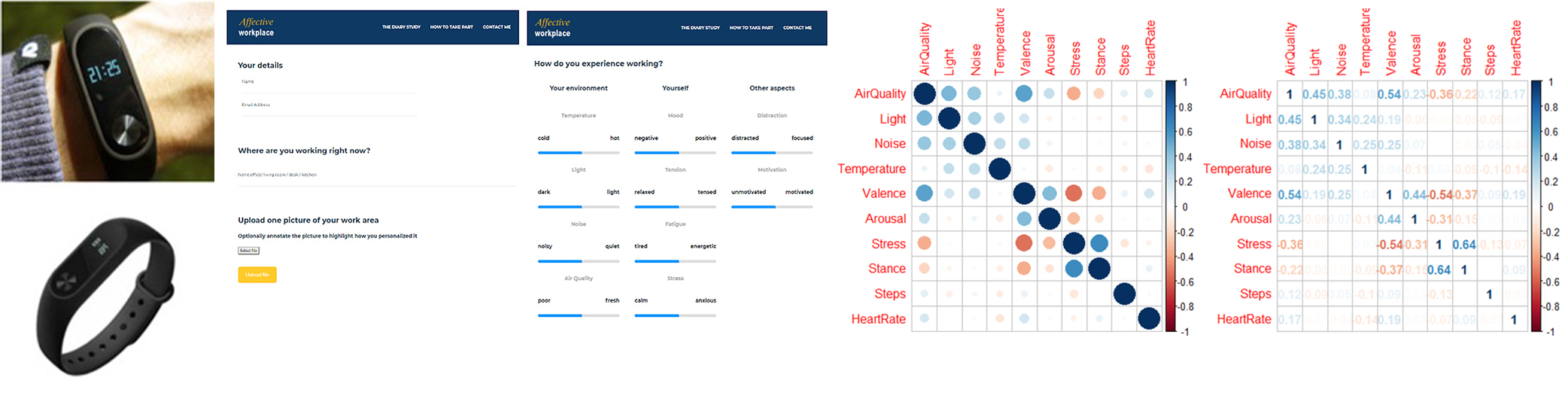 Above Left: Wearable and custom web app used for data qualitative and quantitative collection. Above Right: Correlations Plot between key self-reported wellbeing and environmental data.
The third one discusses findings from a co-design workshop using a custom card-kit, focusing on designing physical interactions for supporting health and wellbeing in the built environment in the context of the hybrid workplace - published in MDPI Architecture, Healthy Habitats—Innovative Approaches to Creating Built Environments That Support Health and Wellbeing see publication.