GenAI Personas
Co-designing Ethical Personas with GenAI and people with Parkinson's
2024-2025
Duration: 3 months
Role: Senior UX Researcher, TORUS Digital Health Project
Team: Design Team, Clinical Experts, ML Engineers, People living with Parkinson's
Methods: Co-design Workshops, Generative AI (Midjourney), Persona Development, Participatory Design, Qualitative Research, Prompt Engineering
Impact: Co-designed AI-generated personas with people living with Parkinson’s, creating more authentic and representative user narratives for healthcare innovation. The project revealed key biases in AI-generated representations and demonstrated a human-centred approach to integrating generative AI into product design / UX research workflows.
Overview
As part of the EPSRC-funded TORUS digital health programme, I led a participatory design project exploring how generative AI could be used to create realistic and representative personas for health technology research.
TORUS develops a smart home monitoring system for Parkinson’s disease, combining computer vision, wearable sensing, and voice-based interactions.
To ensure that future design decisions reflected lived experience rather than assumptions, I worked directly with people living with Parkinson’s to co-create AI-generated personas using Midjourney.
The Challenge
Personas are widely used in product development, but they are often created by researchers and designers without direct user involvement. I wanted to explore whether generative AI could support a more collaborative approach while also examining its limitations when representing complex health experiences.
My Role
I designed and facilitated a three-week co-design process involving MidJourney Generative AI three people living with Parkinson’s.
The workshops focused on:
- Creating diverse character profiles grounded in lived experience (text description).
- Using these character descriptions to create prompts.
- Then used MidJourney generative AI to visualise those characters.
- Iteratively and collaboratively refine character portraits, expressions, activities, and symptom representations.
- Evaluating the realism, emotional accuracy, and representativeness of AI-generated outputs.
- Discussing ethical concerns around the use of Generative AI and the representation of Parkinson’s symptoms
Between workshops, I developed prompts, generated and curated over 2,500 AI-generated images, and translated participant feedback into successive design iterations.
In total, I generated approximately 2900 images, with 103 of them used in storyboards showcasing user journeys.
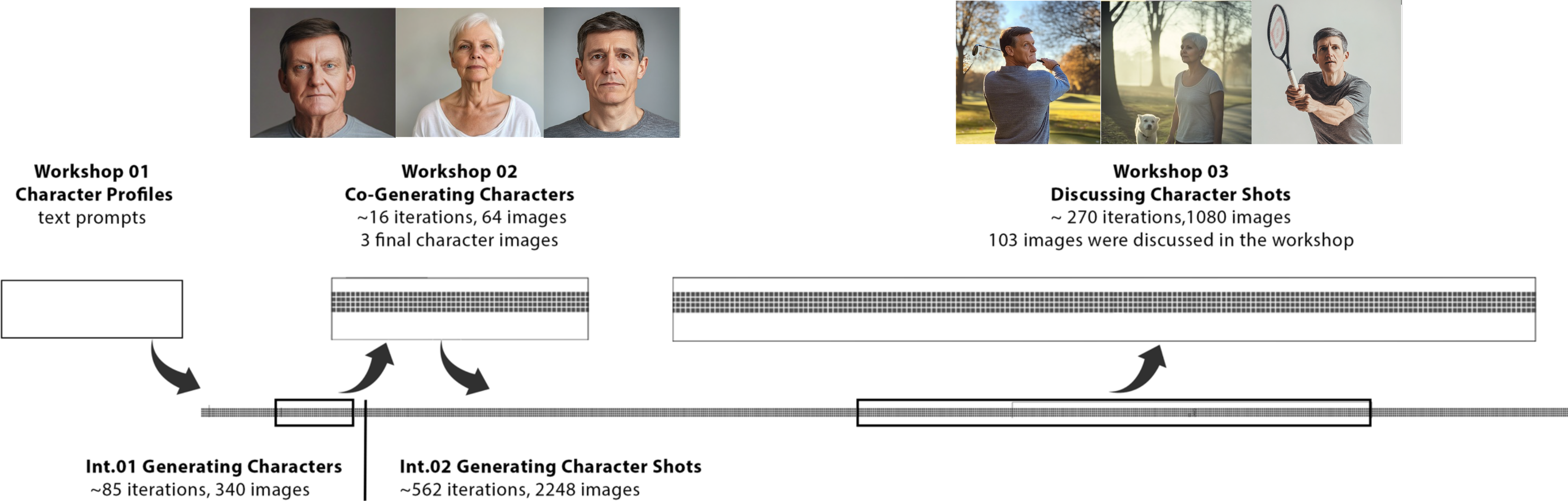
Above: A diagram showing the co-design sessions, the amount of content generated and key design phases.
Outcome
The project resulted in three richly developed personas and a large visual asset library that was subsequently used within the TORUS programme for research, design, communication, and stakeholder engagement activities.
The study also generated insights into the opportunities and limitations of using generative AI in persona creation, highlighting the importance of human oversight, co-design, and lived-experience validation when developing AI-generated representations of health conditions.
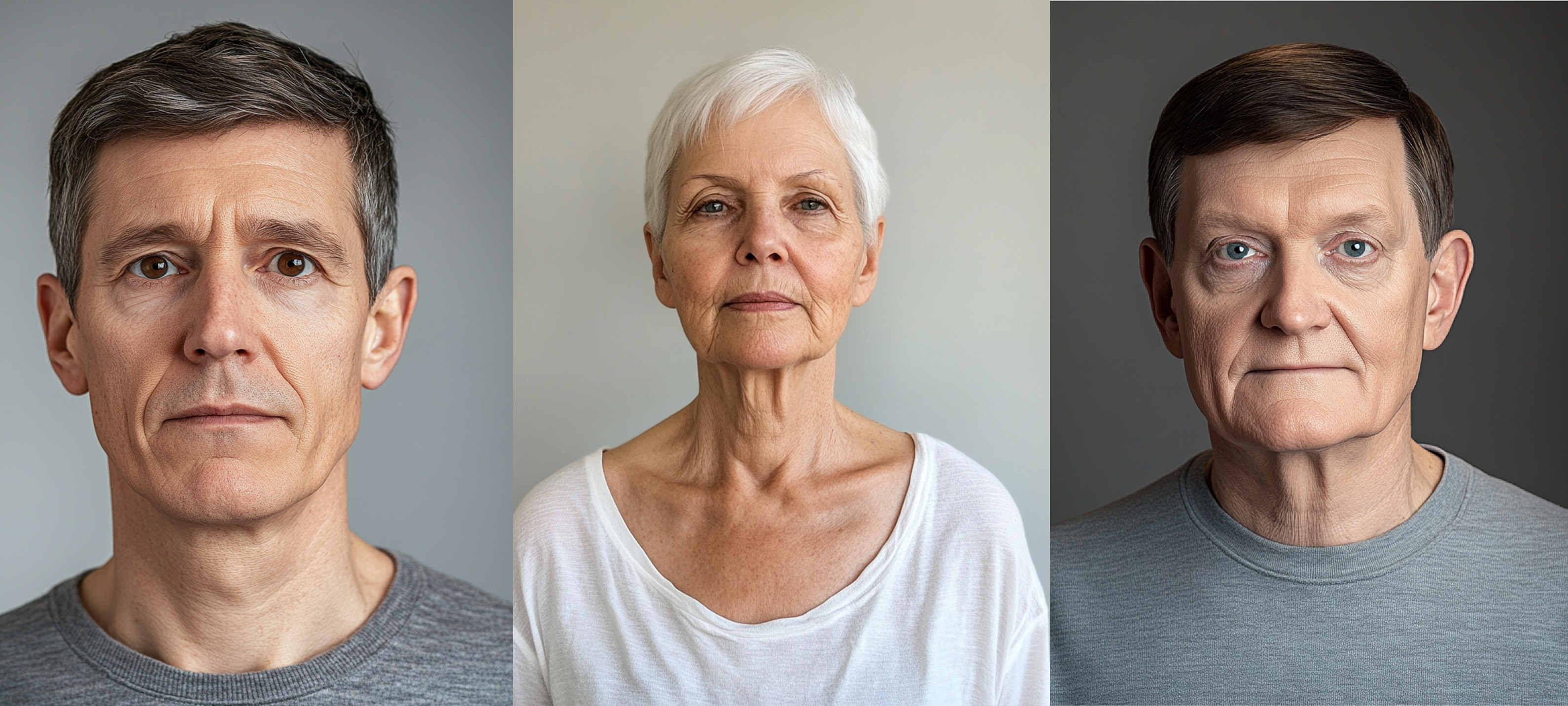
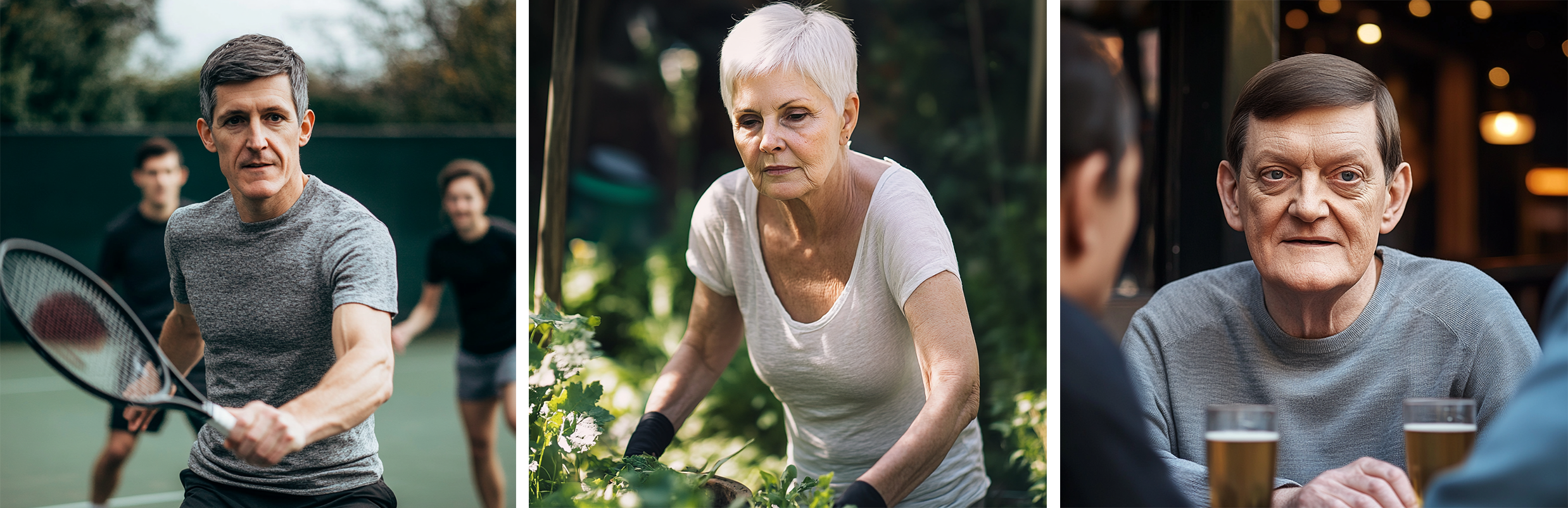
Above: The final characters that were generated collaboratively.
Key Insights
Rather than treating AI as an autonomous content generator, we used Midjourney as a collaborative design tool. Participants helped define character traits, values, symptoms, and life experiences, while I translated these into prompts and visual iterations.
Over the course of the project, I generated and curated more than 2,500 images, iteratively refining prompts, visual references, and character representations based on participant feedback. This process revealed both the creative potential and practical limitations of current text-to-image systems, including challenges around character consistency, control/hallucination, design fixation, and content curation.
AI Does Not Represent Health Conditions Neutrally. One of the most interesting findings was how AI models encoded assumptions about Parkinson’s disease. Early generations frequently portrayed people with Parkinson’s as older, sadder, or more physically impaired than participants felt was representative of their lived experience.
Through iterative co-design, participants helped identify subtle visual cues that felt authentic, while also challenging stereotypes embedded in the generated content. This highlighted the importance of involving people with lived experience when using AI-generated representations in healthcare and product design.
Photorealism Increased Empathy and Engagement. Participants consistently preferred photorealistic personas over sketches or illustrated alternatives. They felt realistic characters better conveyed emotion, personality, and the day-to-day realities of living with Parkinson’s.
The resulting personas became more than research artefacts; they served as empathy-building tools that helped researchers, designers, and stakeholders engage more deeply with user experiences and future product scenarios.
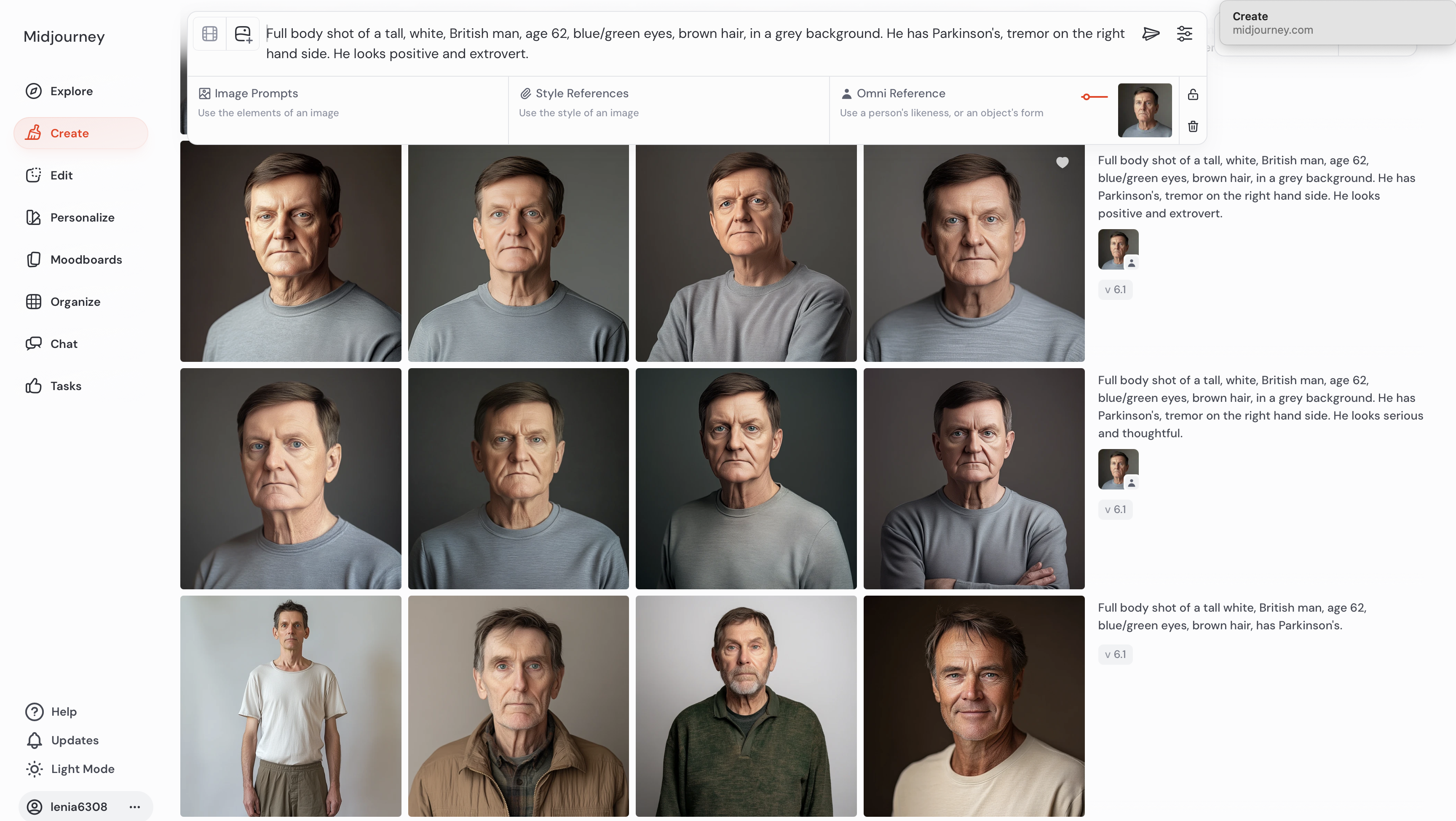
Above: Example of MidJourney prompting examples - refinement and strategy.
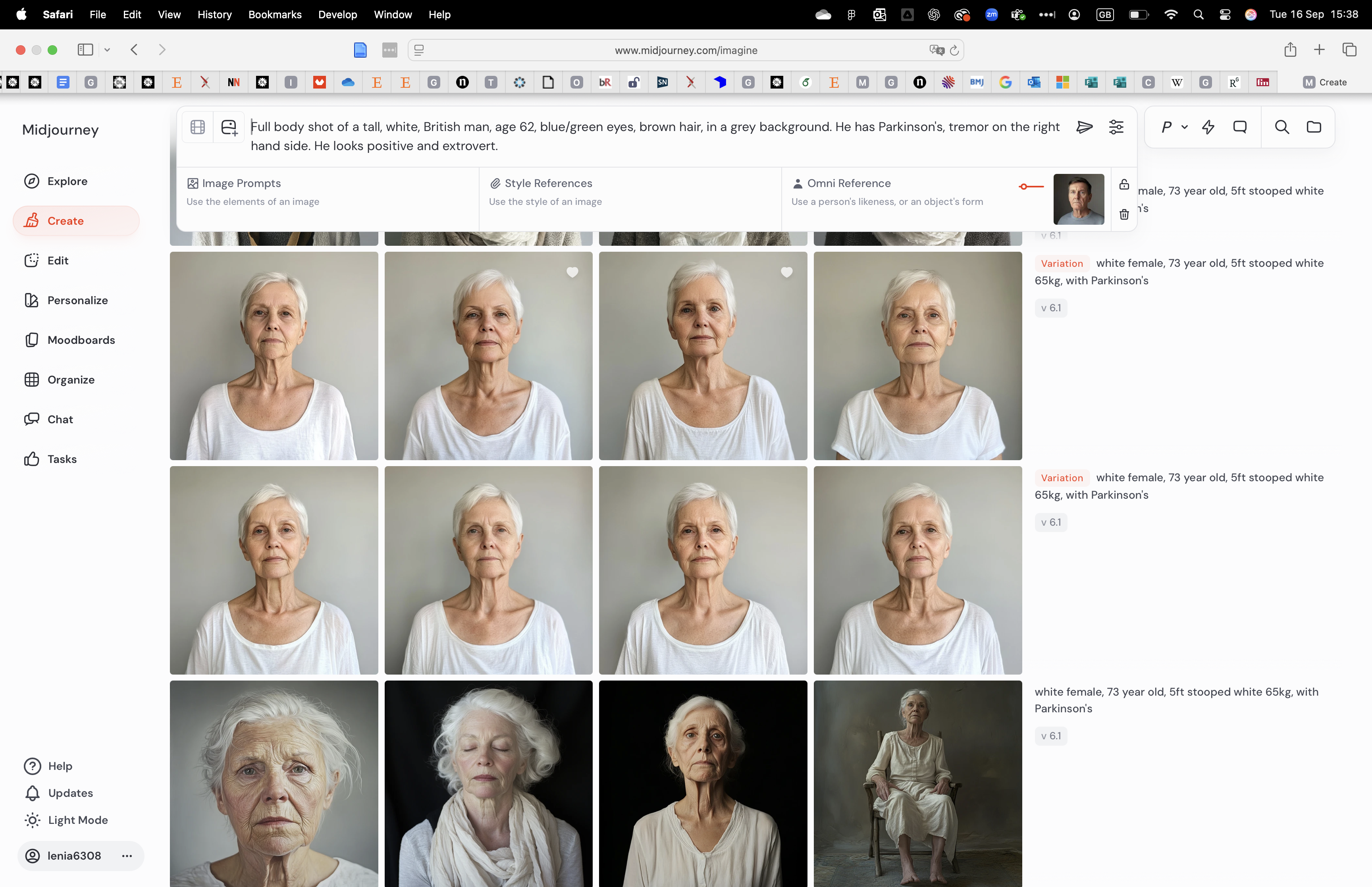
Above: Example of MidJourney prompting examples - refinement and strategy.
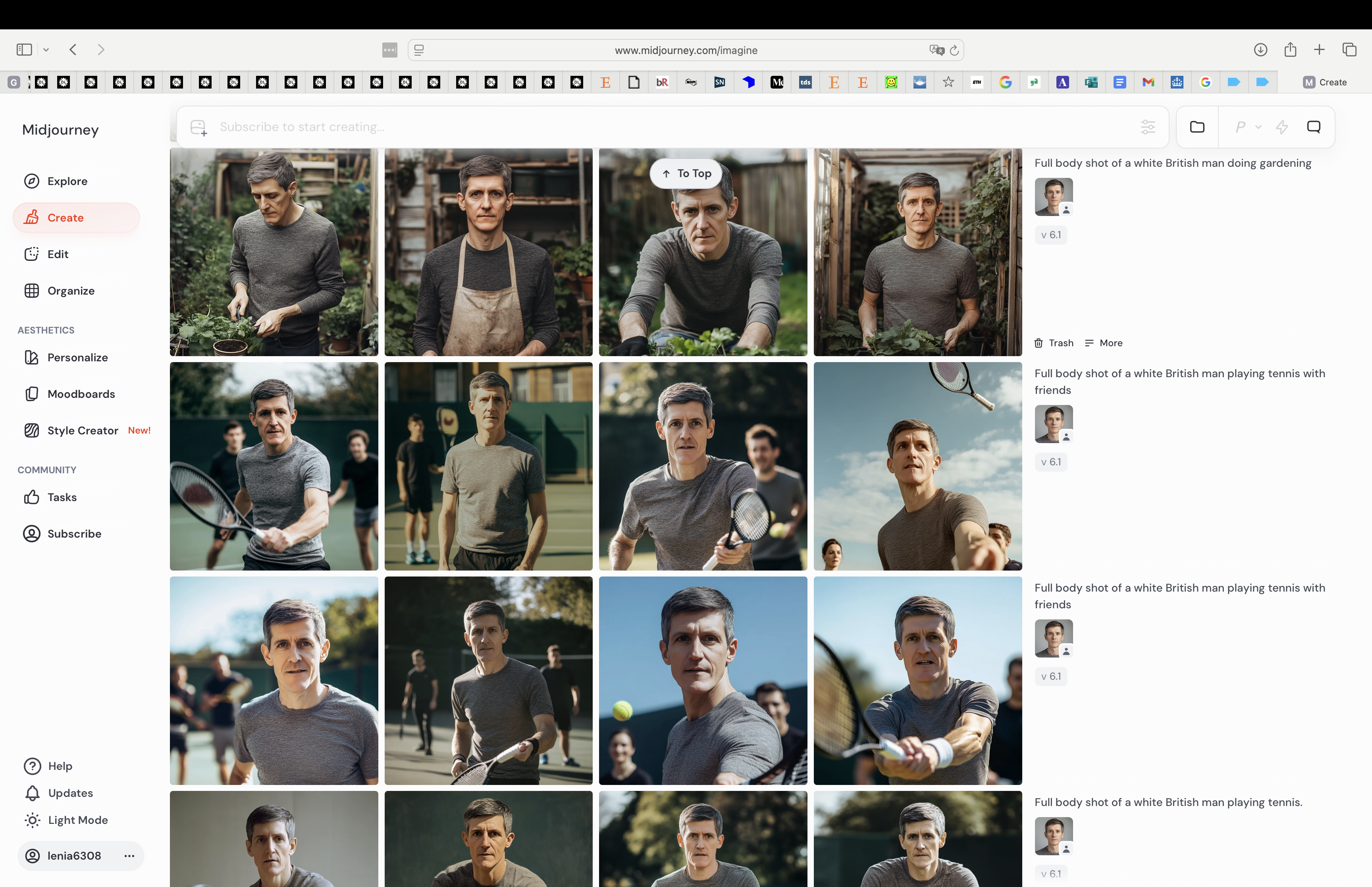
Above: Example of MidJourney prompting examples - refinement and strategy.
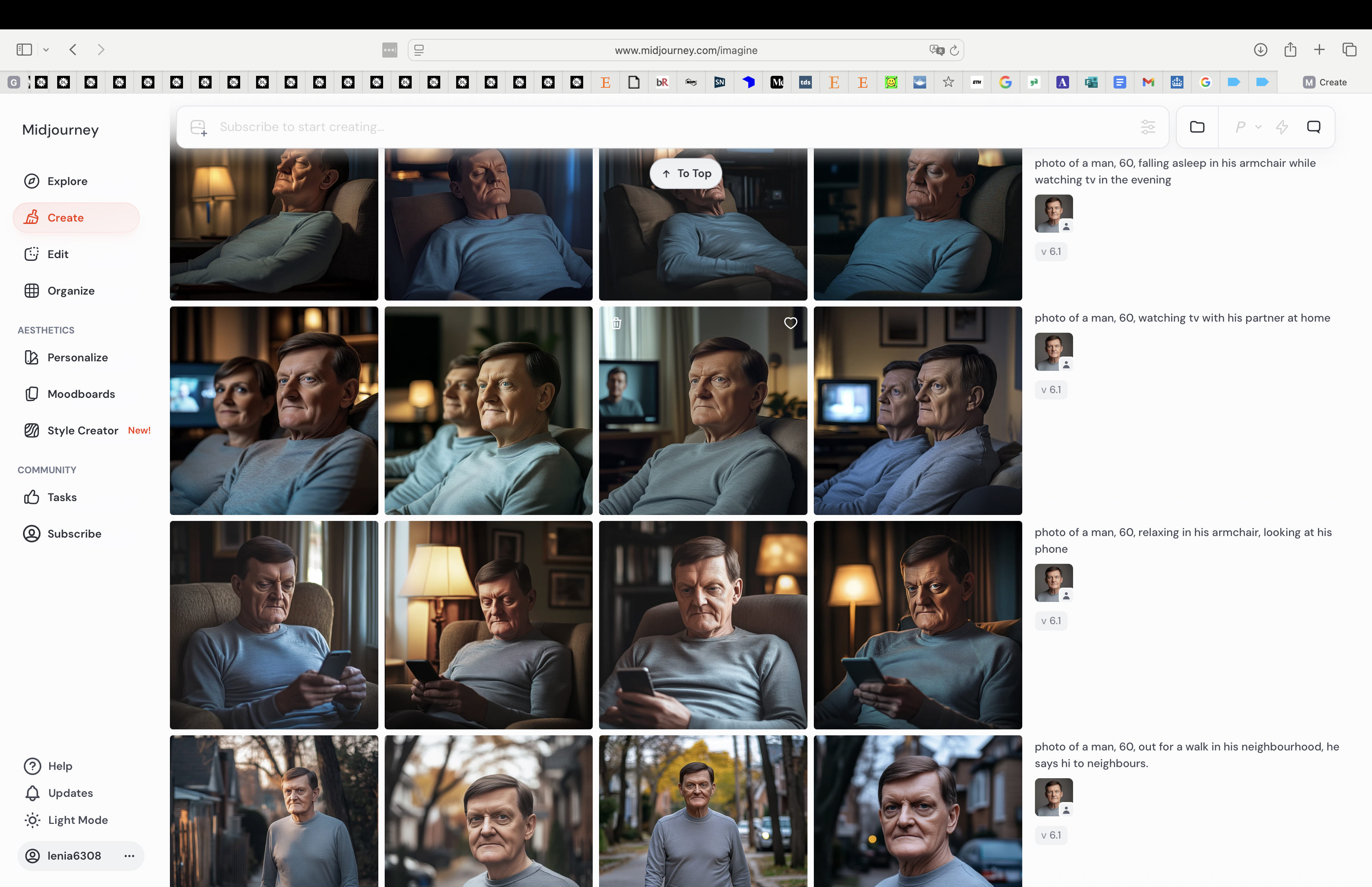
Above: Example of MidJourney prompting examples - refinement and strategy.
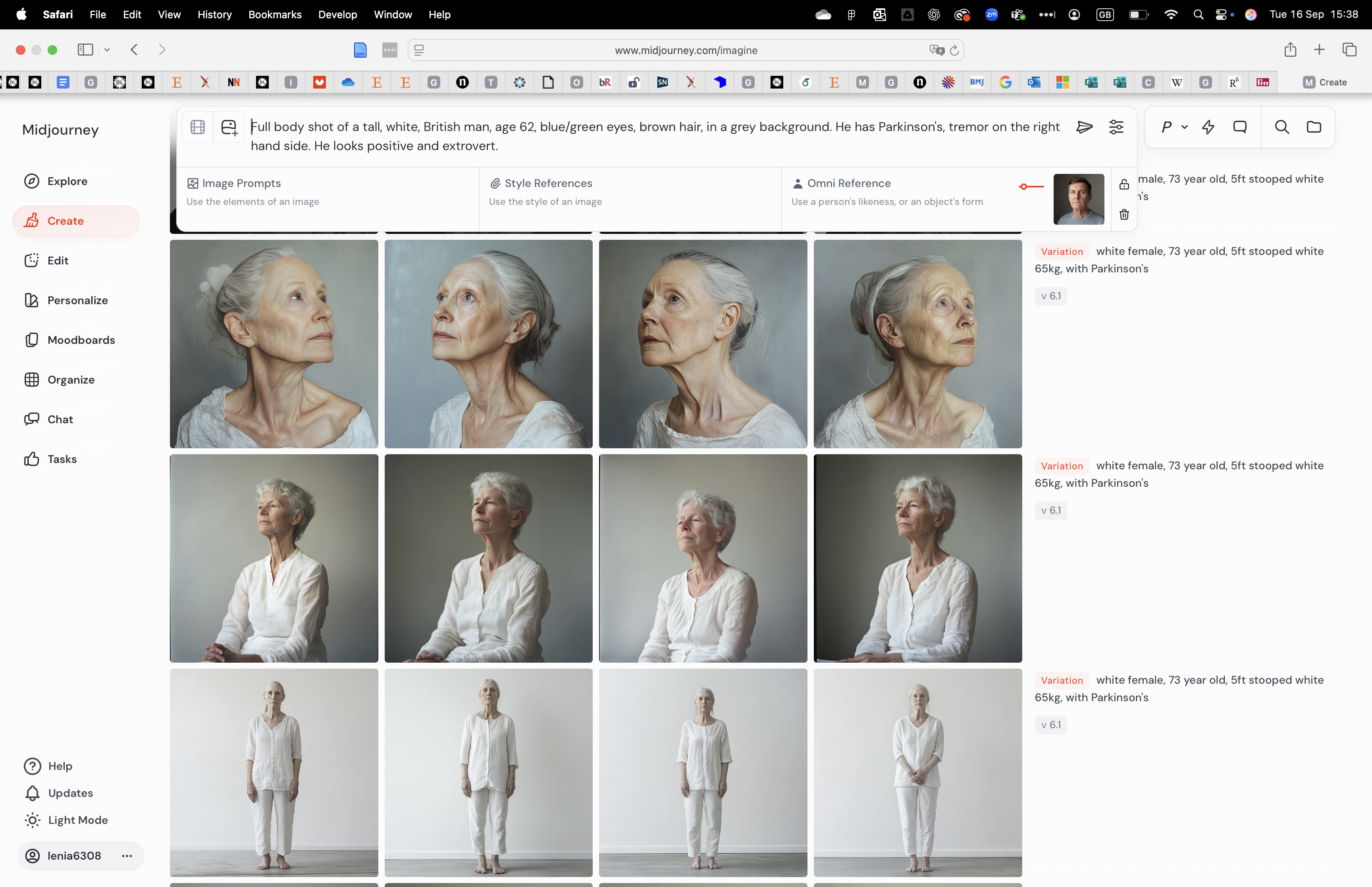
Above: Example of MidJourney prompting examples - refinement and strategy.
Impact
Improved Representation of End Users
By directly involving people living with Parkinson’s in the creation and validation of AI-generated personas, the project moved beyond designer assumptions and produced characters grounded in lived experience. The resulting personas were used throughout the TORUS programme to support research, design discussions, scenario development, and stakeholder engagement.
Uncovered Biases in Generative AI
The project revealed how text-to-image models can reinforce stereotypes associated with chronic health conditions, often portraying Parkinson’s through overly negative or age-related visual cues. Working collaboratively with participants helped identify and challenge these biases, providing practical insights into responsible AI use in healthcare design.
Demonstrated a New Co-Design Approach
The study established a repeatable process for combining participatory design and generative AI, positioning users as active contributors rather than subjects of AI-generated content. This approach showed how AI can accelerate persona creation while maintaining human oversight and authenticity.
Increased Empathy and Stakeholder Engagement
Participants consistently preferred photorealistic personas over traditional illustrated alternatives, reporting that they better captured emotional nuance and everyday experiences. The resulting characters became effective storytelling and communication tools, helping researchers and stakeholders engage more deeply with the realities of living with Parkinson’s.
Generated Design Guidance for Human-AI Collaboration
The project highlighted both the opportunities and limitations of generative AI in design workflows, including challenges around bias, character consistency, prompt authoring, and creative decision-making. These findings informed recommendations for future AI-assisted design processes that balance automation with human expertise and lived experience.